

Table of Contents
Baby Sleep Schedule 0–3 Months: A Realistic Guide for New Parents (2026)
If you’re searching for a perfect baby sleep schedule for 0–3 months, you’re probably exhausted, confused, and trying to bring order to chaotic nights.
Here’s the truth most new parents don’t hear early enough:
👉 There is no strict sleep schedule at this age.
Newborn sleep is not predictable, not structured, and not meant to follow a clock. But that doesn’t mean you’re powerless. With the right understanding and simple routines, you can absolutely improve sleep quality for both you and your baby.
This guide will help you understand what’s normal, what to expect, and how to gently support better sleep patterns in the first 12 weeks.
🧠 What Baby Sleep Looks Like at 0–3 Months
At this age, newborn sleep is still immature and unpredictable. Babies sleep in short cycles and wake frequently for feeding and comfort.
👉 According to the American Academy of Pediatrics, newborn sleep is irregular and heavily influenced by feeding needs and development.
Most babies at this stage:
Have no circadian rhythm yet
Sleep 14–17 hours per day
Wake every 2–4 hours
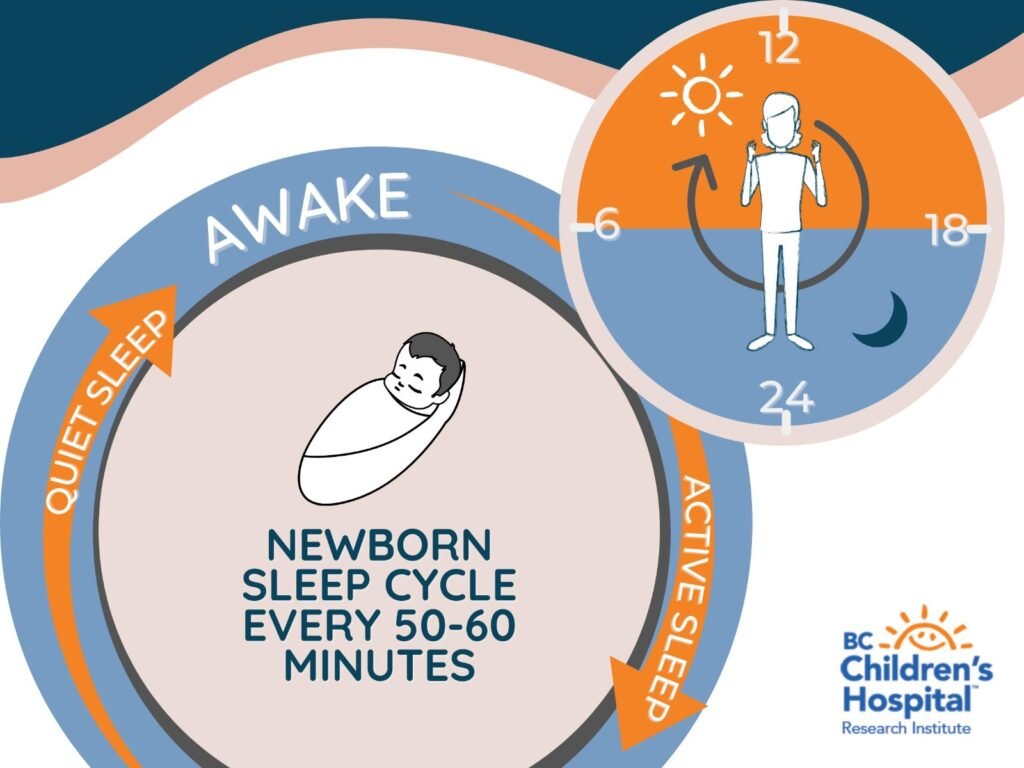
🍼 Newborn Sleep Cycle
Instead of a fixed schedule, newborns follow a repeating cycle:
- Wake up
- Feeding
- Diaper change
- Short awake time
- Sleep again
This pattern is completely normal and expected in early development.
For more developmental context, newborn sleep patterns are linked to brain and circadian development:
NIH Infant Sleep Development Research
🌙 Why Nights Feel So Hard

Most parents assume their baby has a sleep problem. In reality, newborn sleep is simply immature.
Common reasons for night wakings:
- Small stomach (frequent hunger)
- Startle reflex (sudden movements)
- Light or noise sensitivity
- No circadian rhythm yet
👉 Babies this age are biologically designed to wake often.
So if your baby wakes up every 2–3 hours, nothing is wrong.
How to Improve Sleep Without “Sleep Training”
You don’t need strict sleep training at this age. Instead, focus on environment and consistency.
Here are the 3 most effective tools:
💤 1. White Noise (Blocks Disruptions)
White noise creates a steady sound environment that masks sudden noises like doors, TV, or footsteps.
Why it helps:
- Reduces sudden wake-ups
- Helps baby fall asleep faster
- Creates a consistent sleep cue
👉 It essentially builds a “sleep bubble” around your baby.
🤱 2. Swaddling (For Newborns Only)
Swaddling gently wraps your baby, reducing the startle reflex that often wakes them up.
Benefits:
- Mimics womb-like security
- Reduces sudden arm movements
- Helps longer sleep stretches
⚠️ Stop swaddling once your baby starts rolling.
🛌 3. Sleep Sacks (Safe Transition Tool)
Sleep sacks are wearable blankets that keep your baby warm without loose bedding.
Why parents love them:
- Safe sleep environment
- No risk of blankets covering face
- Helps maintain bedtime consistency
👉 They are essential once swaddling ends.
🔄 Combine Them for Best Results
Individually, these tools help. But together, they create a powerful sleep system:
- White noise → blocks interruptions
- Swaddle → prevents startle wake-ups
- Sleep sack → supports safe transition
This combination creates a predictable sleep environment, which is exactly what newborns need.
🧠 What “Good Sleep” Actually Means at 0–3 Months
Forget long stretches of sleep. At this stage, success looks like:
- Baby feeding regularly
- Gradual increase in calm sleep periods
- Fewer extremely long crying episodes
- Small improvements over time
👉 Progress, not perfection.
🌞 Day vs Night Confusion (Very Common)
Many newborns sleep more during the day and stay awake at night.
To gently fix this:
- Expose baby to natural light during the day
- Keep nights dark and quiet
- Avoid stimulation during night feeds
Over time, this helps the body develop a natural rhythm.
💡 Simple Night Routine (Easy to Follow)
You don’t need anything complicated:
- Dim the lights
- Feed calmly
- Change diaper if needed
- Use white noise
- Swaddle or sleep sack
- Put baby down drowsy
Repeat every night.
👉 Consistency matters more than perfection.
🛒 Affiliate Section (Soft & Natural)
Many parents find that simple sleep tools make a big difference during this stage:
- White noise machines
- Swaddles for newborn comfort
- Sleep sacks for safe transition
These don’t “force” sleep—but they make the environment much easier for babies to settle naturally.
In this article you will find everything you need for your child’s sleep routine
😴 Final Thoughts
Baby sleep at 0–3 months is not about control—it’s about understanding.
There is no perfect schedule, no magic trick, and no instant fix. But there is progress.
Once you accept the natural rhythm and support it with simple tools and consistency, nights slowly become easier.
👉 You’re not trying to fix your baby.
👉 You’re helping them adapt safely to the world.
This blog is based on the following studies
American Academy of Pediatrics – Safe Sleep
💡 For more tips, please visit our website